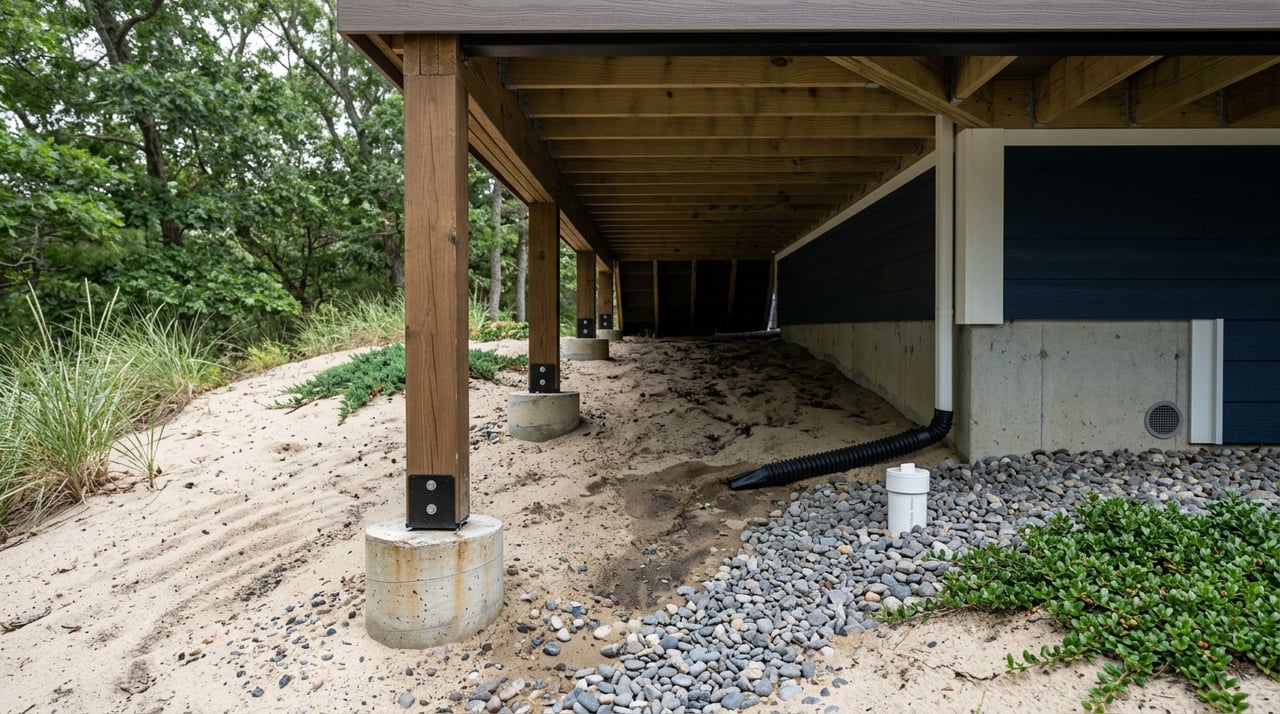
Buying in Dune Acres is not just about finding a beautiful home near the lake. It is also about understanding what sits under the home, how water moves across the site, what the shoreline is doing, and what future repairs or improvements may require. If you are considering a purchase here, construction expertise can help you see risks and value more clearly before you close. Let’s dive in.
Dune Acres Is a Different Kind of Market
Dune Acres is a Lake Michigan shoreline community, and that matters from day one. The town’s plan describes 2.20 miles of sandy beach shoreline and makes clear that preserving the natural environment and open space is a core goal. It also states that new homes should fit sensitively within that natural setting.
That means you are not evaluating a home the same way you would in a typical suburban neighborhood. In Dune Acres, the beach, the dune, the lot lines, and the relationship between the house and the land all play a role in long-term value.
Indiana DNR also describes the Lake Michigan shoreline as a dynamic system shaped by wind, waves, and changing lake levels. For you as a buyer, that means the property’s setting is not static. A great view is only one part of the story.
Why Construction Knowledge Helps Buyers
A construction-literate real estate broker can help you look past finishes and staging to focus on the things that often affect ownership costs most. In Dune Acres, that includes slope, drainage, erosion, foundations, vegetation disturbance, and private utility systems.
This kind of knowledge matters because many of the biggest issues are not obvious during a quick showing. A home can look well cared for and still raise important questions about water movement, soil stability, or permit needs for future work.
Mark Hull’s background is especially relevant here. With decades of construction and development experience, a deep connection to Dune Acres, and a hands-on approach to inspections and technical issues, he helps buyers translate site conditions into practical decisions.
Sand and Slopes Affect Ownership Costs
The town plan says fine dune sand is the predominant soil type in most residential areas. It also notes that this sand does not adhere well, and that disturbing vegetation or slopes can lead to rapid erosion. That is a major reason construction expertise matters in this market.
In simple terms, the ground under and around the house can influence stability, drainage, and maintenance. A buyer should not only ask whether a house looks solid, but also whether the site has been handled in a way that supports long-term performance.
Purdue guidance adds useful context. Sandy soils generally have low water-holding capacity and high infiltration, while compaction can reduce porosity and make water and root movement harder. Put another way, how the site was graded, compacted, and landscaped can affect how water behaves around the property.
Drainage Should Never Be an Afterthought
In a dune setting, drainage can be just as important as the structure itself. You want to know how water leaves the site after heavy rain, whether runoff is moving toward or away from the home, and whether upslope conditions may create moisture issues over time.
This is one area where construction experience helps you ask better questions early. Instead of waiting for a vague inspection note, you can look at grading, retaining features, drainage paths, and signs of moisture intrusion with a more informed eye.
That matters because water problems often become expensive problems. On a sloped or sandy site, small drainage mistakes can lead to erosion, settlement concerns, or ongoing maintenance that affects both enjoyment and resale.
Shoreline Conditions Can Shape Value
Dune Acres buyers should also understand that shoreline conditions are not uniform from lot to lot. The town plan says shoreline conditions are continually affected by changing lake levels and wave energy, and that individual shoreline protections vary widely.
A recent Purdue shoreline report based on 2022–23 field assessments found that Indiana’s Lake Michigan shoreline remained under significant stress from high-water levels. It also found that Dune Acres loses beach and foredune area from west to east.
That does not mean every property faces the same level of concern. It does mean shoreline context should be part of your due diligence, especially if you are buying for long-term enjoyment, future renovation plans, or eventual resale.
Beach Rights and Lot Boundaries Matter
In Dune Acres, you should verify exactly what comes with the property. The town plan states that Dune Acres owns most lakefront beaches, except for some lots with riparian rights.
That distinction is important because buyers sometimes assume that proximity to the water automatically means broader ownership rights than the deed actually provides. In this market, access, ownership, and riparian rights are not interchangeable.
A construction-minded adviser can help connect these title and site questions to real-world use. If you are considering site work, shoreline repairs, or improvements near the water, knowing the exact property boundaries and rights is essential.
Permits May Affect Future Plans
If you are thinking about repairs, additions, drainage changes, or shoreline work, permit review may be part of the process. Indiana DNR says projects over, along, or lakeward of the shoreline, permanent structures in Lake Michigan, and certain drain or ditch work near a freshwater lake can require prior approval.
That means a future project may involve more than design ideas and contractor pricing. It may also require agency review, documentation, and additional time.
Indiana DNR’s Lake Michigan staff reviews construction and emergency repair requests and serves as the state’s expert on wind, waves, coastal erosion, dredging, sand movement, and seawall construction. For a buyer, that makes early due diligence even more valuable.
Private Wells and Septic Need Careful Review
Some Dune Acres properties may rely on private systems, and those deserve close attention. Porter County requires an onsite visit, soil test, and field investigation report before a well-and-septic permit is issued.
That tells you something important about the market. Site conditions can drive feasibility as much as house design does, especially on lots with sand, slope, or drainage challenges.
Porter County also notes that septic permits expire after two years, and wells must be at least 50 feet from septic tanks, laterals, and sewer lines. If a home uses private systems, you should budget for testing, document review, and the possibility of replacement or permit-related costs.
Purdue septic guidance adds that trench work should be done only when soil is dry and friable and may require diversion ditches or curtain drains to keep upslope water away from the system. That is another reminder that in Dune Acres, the site and the systems are closely connected.
Existing Infrastructure Still Deserves Review
Even when a home itself looks ready, the surrounding infrastructure can affect your ownership experience. The town plan references roads, a clubhouse, a security office, a town hall, and a maintenance building as part of Dune Acres’ existing infrastructure.
It also specifically calls for putting utility lines underground because overhead lines are vulnerable in storms and can create outage and fire risk. For buyers, that highlights the importance of asking practical questions about utilities, storm impacts, and ongoing maintenance.
The same plan recommends a maintenance schedule, a disaster plan, and a permitting process for outside contractors and utility companies. In a shoreline setting, those details are part of responsible long-term stewardship.
What Buyers Should Look For
If you are touring homes in Dune Acres, it helps to move beyond surface-level impressions. A beautiful setting can make it easy to overlook conditions that deserve a closer look.
Here are some smart questions to ask during your search:
- Has the shoreline needed erosion repair, beach nourishment, or hardening?
- Does the lot include riparian rights, and what does the deed actually convey?
- What type of foundation is in place, and are there signs of settlement or moisture intrusion?
- How does water move off the site after heavy rain or storms?
- Are current well, septic, or survey records available?
- Would planned repairs or additions require DNR or county permits?
These questions do not replace inspections or legal review. They do help you identify where deeper due diligence may be needed before you commit.
Why This Matters in Negotiation
Construction expertise is not just helpful for spotting issues. It can also improve the way you negotiate.
When you understand a property’s site conditions, systems, and likely project constraints, you are in a better position to estimate real costs. That can affect pricing strategy, inspection requests, repair credits, and whether a home is truly a fit for your goals.
This is especially important in a market like Dune Acres, where two homes with similar views can carry very different ownership profiles. The details beneath the surface often matter most.
Buy With Clarity, Not Assumptions
A shoreline home in Dune Acres can offer a remarkable lifestyle, but it also asks more of a buyer than a standard home search. You need to understand the land, the systems, the shoreline, and the rules that may shape future work.
That is where construction expertise becomes a real advantage. It helps you move forward with better questions, clearer expectations, and more confidence in your decision.
If you want a local adviser who understands both the lifestyle and the technical side of buying near Lake Michigan, book a complimentary consultation with Mark Hull.
FAQs
Why does construction expertise matter when buying in Dune Acres?
- Construction expertise helps you evaluate slope, drainage, sandy soils, erosion risk, foundations, and private systems that can affect ownership costs and future resale.
What should buyers know about shoreline property in Dune Acres?
- Buyers should know that Lake Michigan’s shoreline is dynamic, shoreline conditions vary, and some future work near the water may require Indiana DNR review or approval.
Do all lakefront homes in Dune Acres include beach ownership or riparian rights?
- No. The town plan says Dune Acres owns most lakefront beaches except for some lots with riparian rights, so buyers should verify exactly what the deed includes.
Why are drainage and soil conditions important in Dune Acres real estate?
- Fine dune sand, slope disturbance, and poor drainage planning can contribute to erosion, moisture problems, and higher maintenance costs over time.
What should buyers ask about septic and well systems in Porter County?
- Buyers should ask for current records, testing information, permit history, and site details because Porter County requires onsite review and soil evaluation for well-and-septic permits.
Can future repairs or additions in Dune Acres require permits?
- Yes. Depending on the work, shoreline projects, certain drainage changes, and structures near Lake Michigan may require prior approval from Indiana DNR or county review.